

What Innovation Day Revealed About the Future of Customer Operations
Innovation Day brought together automotive leaders to explore the trends reshaping customer operations.
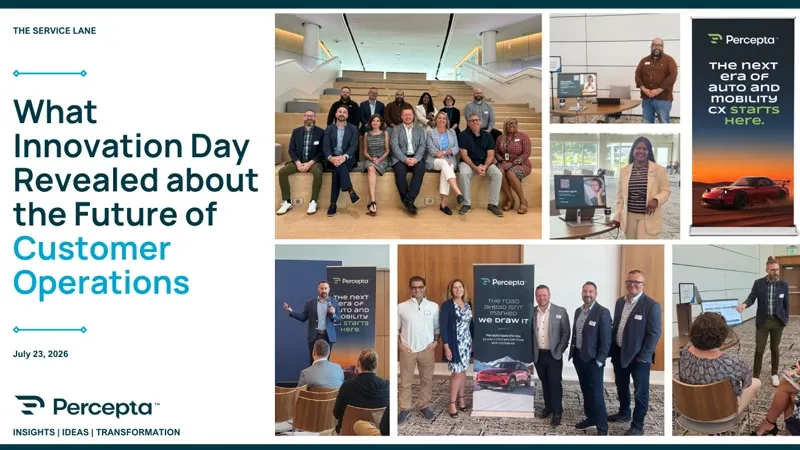
Originally published on LinkedIn on August 5 2026.
Innovation Day brought together automotive leaders to explore the trends reshaping customer operations. The conversations revealed how AI, analytics, and operational expertise are working together to create measurable business value across the ownership journey.
When we planned Percepta's first Innovation Day, the objective wasn't simply to showcase new ideas. It was to bring together leaders from our automotive and mobility clients, compare perspectives on where customer operations are headed, and create the kind of conversations that rarely happen during the pace of everyday business.
Hosted at the Ford Experience Center, the day combined discussions on customer experience, artificial intelligence, analytics, technical support, proactive engagement, and revenue generation. As attendees moved between sessions and gathered around the tabletop demonstrations, a different story began to emerge.
A discussion about AI became a conversation about governance. A demonstration of analytics evolved into a discussion about product quality. Questions about connected vehicles quickly expanded into conversations about customer loyalty, dealer operations, and the future of ownership.
By the end of the day, one thing had become increasingly clear. Customer operations are no longer evolving one capability at a time. They are becoming a far more integrated business function, where technology, data, expertise, and operational discipline all work together to create value.
From AI Adoption to Operational Readiness
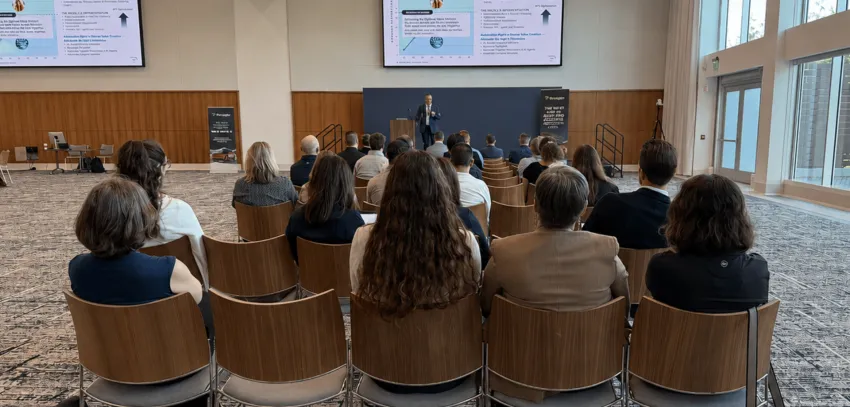
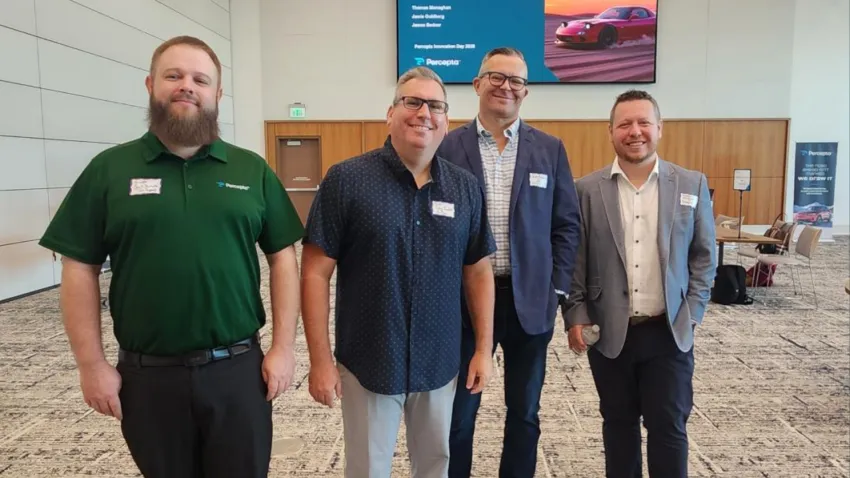
The opening discussion, led by Thomas Monaghan, James Goldberg, and James Bednar, framed many of the conversations that followed. Drawing on TTEC's latest CX Trends research, they explored how changing customer expectations, AI adoption, and operational complexity are reshaping customer experience across industries.
One statistic in particular set the tone. While organizations continue investing heavily in AI, many are still struggling to realize measurable business value. At the same time, customer satisfaction has remained largely unchanged despite years of digital transformation efforts. The implication wasn't that organizations need more technology. It was that technology alone isn't enough.
James Bednar challenged attendees to think differently about automation. Rather than asking how much work AI could replace, he encouraged the group to consider where AI creates the greatest value alongside human expertise. As routine interactions become increasingly automated, the remaining conversations often require more judgment, deeper technical knowledge, and greater empathy—not less.
It was a subtle shift in perspective, but an important one. The discussion was no longer about AI itself. It was about building organizations capable of applying AI responsibly, measuring its impact, and integrating it into everyday operations.
Innovation Becomes Meaningful When It Solves Real Problems
After the opening discussion on CX trends, attendees moved into seven tabletop sessions where those broader ideas came to life. Rather than discussing the future in theory, each demonstration explored how organizations are beginning to solve today's customer operations challenges.
Rajitha Rupani returned to a theme introduced during the opening discussion: AI doesn't create value simply because it's deployed. Organizations realize measurable outcomes when associates trust it, adopt it, and operate within governance models designed to scale successful pilots. That requires looking beyond traditional measures like average handle time or even customer satisfaction. Adoption rates, confidence scores, and changes in how associates work often provide a better indication of whether AI is creating lasting operational value.
That same philosophy carried naturally into Hershel Eason's demonstration of DAISY. By analyzing every customer interaction rather than a small sample, organizations can identify emerging product concerns, operational friction, and opportunities while there is still time to respond. But analytics also play another role: helping organizations determine whether change initiatives actually worked. Hershel shared how DAISY was used to identify which associates would benefit most from empathy coaching, contributing to a 9.27-point improvement in NPS and a Gold Stevie Award for the program.
Using data to improve the customer journey also surfaced in Pete Rodriguez's discussion of proactive engagement. A Vehicle Health Alerts program transformed connected vehicle data into meaningful customer outreach, increasing engagement by 274%, generating a 118-fold increase in dealership appointments, and achieving a 91.5 Net Promoter Score. The technology itself wasn't the story. The value came from using information to reduce customer effort before frustration began.
Value creation emerged as another recurring theme. George Baraket explored how customer operations are increasingly contributing to subscription growth and connected services revenue, while Scott Burnette showed how specialized technical expertise and modern warranty operations help organizations control costs while improving dealer and customer outcomes. Together, the discussions reflected two sides of the same equation: revenue generation and cost avoidance. Customer operations are increasingly expected to function as value engines, not cost centers, delivering more than 15x client-value ROI across these programs.
Viewed individually, each conversation explored a different operational challenge. Together, they answered the same question: How do we build customer operations that create greater value for customers and the business? Organizations are no longer asking which individual capabilities they should invest in next. They're beginning to ask how those capabilities work together to create customer operations that learn faster, respond earlier, and continuously improve.
Customer Operations Are Expanding Beyond Support
Viewed individually, each conversation explored a different operational challenge. Together, they answered the same question: How do we build customer operations that create greater value for customers and the business?
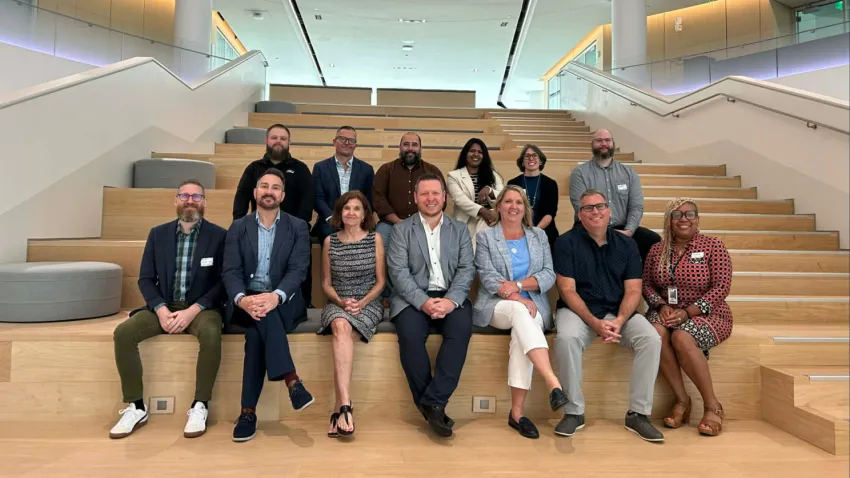
One of the advantages of the tabletop format was that attendees could move freely between conversations. As they did, the boundaries between those conversations began to disappear. Analytics led to discussions about product quality. Connected vehicles became conversations about customer loyalty. Revenue generation connected naturally to technical support and warranty operations.
Rather than seeing isolated functions, attendees were beginning to see a connected operating model.
That broader perspective reflects what is happening across the automotive industry. Customer operations are evolving beyond traditional support to strengthen loyalty, improve dealer relationships, generate revenue, identify emerging product concerns, and create value throughout the ownership journey.
Innovation Day wasn't intended to predict the future. It was an opportunity to bring together experienced practitioners and compare perspectives. If there was one observation that stayed with us after the day concluded, it was this: the organizations creating the greatest business value won't necessarily be those that deploy the most technology. They'll be the ones that develop the operational maturity to apply it thoughtfully, integrate expertise where it matters most, and continuously improve.
The customer experience remains the outcome. Customer operations are the capability that makes it possible.