

Fleet Dashcams Are Growing Across Europe. So Are Questions About Privacy
Originally published on LinkedIn on June 17, 2026.
Imagine a fleet manager receiving an alert. A driver appears fatigued. The vehicle hasn't crossed a safety threshold. No incident has occurred. No one has called for assistance. But video analytics have identified signs of distraction and triggered an intervention before a problem becomes a crisis.
Five years ago, this might have sounded futuristic. Today, it's becoming a reality for fleets adopting next-generation video telematics.
For many North American fleets, dashcams have evolved far beyond simple recording devices. Increasingly powered by AI and integrated with telematics platforms, they help organisations improve safety, reduce risk, and gain deeper visibility into what happens on the road. According to Verizon Connect's 2026 Fleet Technology Trends Report, 46% of fleets now use AI-enabled video telematics, up from 36% just three years ago (2026, Fleet Technology Trends Report).
As adoption expands across Europe, however, fleet operators are approaching the technology differently than their North American counterparts. While safety and operational efficiency remain important goals, discussions in Europe often begin with a different question: How can organisations capture the benefits of video telematics while respecting driver privacy and navigating increasingly complex regulatory requirements?
Why Dashcams Matter Now
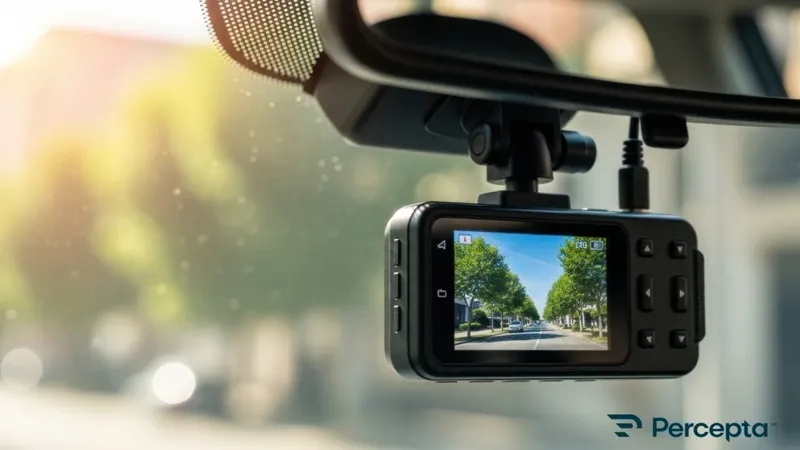
Modern fleet dashcams are no longer passive recording devices. Traditional telematics can tell fleet managers that a vehicle braked suddenly, exceeded a speed threshold, or deviated from a planned route. Dashcams add an important layer of context by helping explain why those events occurred, helping to answer questions such as: Was the driver distracted? Was fatigue a factor? Or was another vehicle responsible?
That additional visibility is becoming increasingly valuable as fleet operators face pressure to improve safety performance, reduce claims costs, and manage increasingly complex operations. Video telematics can help identify risky behaviours before they contribute to an incident, creating opportunities for proactive intervention rather than reactive investigation.
The business case continues to strengthen. Research from Samsara found that organisations with broad dashcam deployments reported measurable operational benefits, including faster claims resolution, improved driver exoneration, and significant cost savings associated with risk reduction and accident prevention (2024, Dash Cams Deliver Measurable ROI).
For fleet operators, the conversation is increasingly shifting away from cameras alone and toward a broader ecosystem of connected vehicle intelligence.
Europe's Different Starting Point
The opportunity may be similar on both sides of the Atlantic, but the path to adoption looks very different.
In North America, video telematics has largely been framed as a business tool. Fleet operators often evaluate deployments based on safety outcomes, insurance costs, productivity gains, and operational performance.
Across Europe, privacy considerations play a much larger role in implementation decisions. Organisations must navigate requirements around data collection, retention, consent, and employee monitoring. As a result, the discussion frequently extends beyond technology capabilities to include governance, transparency, and trust.
One reason is the complexity of the operating environment itself. Unlike North American fleets, which often operate within jurisdictions that share similar approaches to telematics and driver monitoring, European fleets frequently cross borders where privacy regulations, labour laws, and employee monitoring requirements can vary significantly. This complexity makes deployment decisions as much about governance and trust as technology itself.
The impact of those differences becomes particularly clear when looking at individual markets.
- The United Kingdom remains one of Europe's most mature telematics environments, with growing adoption of video telematics solutions across commercial fleets. Organisations are increasingly focused on integrating dashcams with existing telematics platforms while balancing driver rights and transparency requirements.
- Germany continues to approach the technology through a stronger privacy lens. Interest in safety and operational visibility is growing, but organisations must carefully navigate regulations surrounding employee monitoring and workplace surveillance.
- Italy represents an even more cautious environment. Regulatory scrutiny around driver monitoring has created additional complexity for fleet operators, making deployment decisions more challenging than in many other European markets.
For fleet managers operating across borders, this creates a unique challenge. A video telematics deployment that satisfies requirements in one country may require different policies, retention settings, consent processes, or driver controls in another. Success depends not only on choosing the right technology, but also on creating governance frameworks that can adapt to different regional expectations.
Safety, Trust, and the Future of Fleet Visibility
Despite the complexities, momentum is building across the region. Industry forecasts project that the European dashcam market will nearly triple in value by 2032, reaching approximately $3.8 billion (2024, Europe Dashcams Market). The growth signals a broader shift toward video telematics as fleet operators seek greater visibility, stronger safety outcomes, and more data-driven decision making.
The organisations seeing the greatest success are often those that avoid positioning dashcams as surveillance tools. Instead, they focus on how the technology protects drivers, improves safety outcomes, and provides objective context when incidents occur. In these environments, driver acceptance becomes just as important as technical capability.
As fleet technology continues to evolve, the challenge is no longer whether video telematics can deliver value, but how to deploy it in a way that aligns with local expectations, regulatory requirements, and driver trust. The future of video telematics in Europe will be shaped not only by what the technology can do, but by how effectively organisations balance operational visibility, privacy, and the human experience behind the wheel.
About our Guest Author:
As a Global Operations Program Manager at Percepta, Mark Meikle-Braes works with automotive and mobility brands to improve customer experience, fleet operations, and connected vehicle support across global markets. Based in the UK, he leads strategic programmes focused on operational excellence, digital transformation, and emerging technologies. His experience supporting telematics and fleet initiatives provides a practical perspective on how organisations can balance innovation, safety, and trust in an increasingly connected world.