

Connected, But Not Understood
Why the Connected Vehicle Strategy Risks Leaving Customers Behind
Originally published on LinkedIn on May 7, 2026.
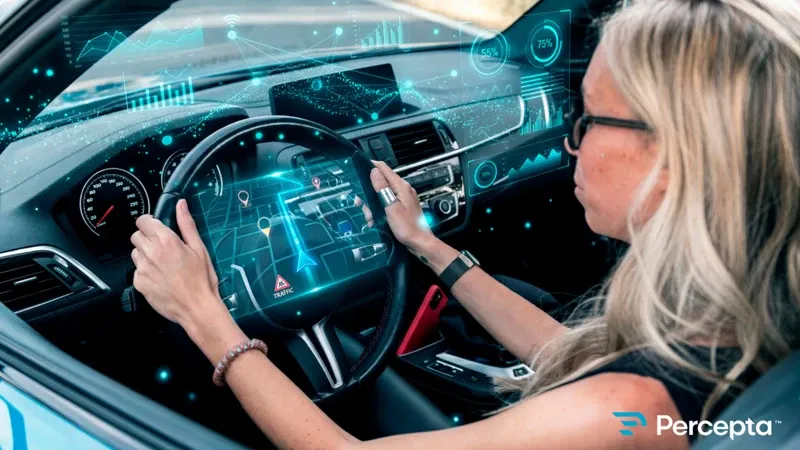
When people talk about the future of connected vehicles, it is usually framed as the art of the possible.
Your vehicle becomes an extension of your digital life. It recommends restaurants on the way home from work, routes you around traffic, finds parking downtown, and updates itself overnight while sitting in the garage. Recalls are resolved through over-the-air updates instead of dealership visits. EV owners talk about waking up to new functionality that makes the vehicle feel newer than the day they bought it.
And somewhere ahead sits the industry’s holy grail: the car that drives itself while passengers talk, work, or simply enjoy the ride.
The automotive industry has spent years building toward that future, and in many ways, the progress is real. Software-defined vehicle architectures are reshaping how OEMs think about revenue, ownership, and customer engagement. Forbes recently described connected vehicles as long-term digital assets that continue generating value through subscriptions, OTA capabilities, personalization, and connected ecosystems long after the original purchase.
Easy. Effortless. Seamless.
But, what struck me recently was how different that future sounds inside an actual connected vehicle support operation.
A few weeks ago, I sat in on a discussion with several leaders responsible for connected vehicle support programs. Between them, the group oversees app functionality, infotainment, navigation, remote commands, and OTA updates across a large automotive ecosystem. Listening to the conversation, it became clear that the gap between the connected vehicle vision and the average ownership experience today is still much larger than the industry often acknowledges.
The Connected Vehicle Future Already Sounds Familiar
The issues customers call about are not futuristic. In many cases, they are surprisingly ordinary. Customers struggle to log into the app. Remote commands stop working after account changes or updates. Navigation systems suddenly look unfamiliar. Features customers relied on yesterday behave differently today.
One of the more interesting observations from the conversation was how heavily many drivers still depend on embedded navigation systems despite carrying smartphones with Google Maps or Apple Maps in their pocket. The habits built around in-vehicle systems like Garmin and TomTom remain surprisingly strong, particularly among long-term vehicle owners who still view the vehicle itself as the primary source of driving information.
That point reveals something larger about connected vehicle adoption. The industry often talks about connected ecosystems as though customers naturally evolve alongside the technology. Operationally, that is not always what support organizations are seeing.
Historically, vehicle ownership was built around stability. Customers expected the vehicle they drove home from the dealership to behave largely the same way for years at a time. Features remained familiar and the only interface were the gauges on the dashboard and radio. Even major technology upgrades were relatively infrequent compared to the continuous update cycles consumers now experience in modern connected ecosystems.
Connected vehicle strategies have changed that model fundamentally. Vehicles are now tied to apps, cloud services, subscription ecosystems, personalization layers, remote diagnostics, and OTA software deployments that continue evolving long after purchase. And, as Gartner’s Hype Cycle for Connected, Electric and Autonomous Vehicles notes, that is because software-defined architectures, AI-enabled interfaces, and connected ecosystems are becoming foundational to modern automotive strategy.
Customers Still Expect Vehicles to Behave Like Vehicles
Strategy on paper is one thing. Whether customer expectations have evolved at the same pace as the technology itself is another.
Consumers generally tolerate rapid change in traditional technology environments because they expect phones, applications, and digital platforms to evolve constantly. Vehicles occupy a different psychological space. Customers still associate driving with familiarity, predictability, and control. When the ownership experience changes unexpectedly, even relatively small changes can create disproportionate frustration because the vehicle no longer feels stable in the way customers expect it to. Even relatively minor behavioral shifts can create resistance. Percepta SVP, James Goldberg, recently described a friend who refuses to buy a plug-in hybrid despite having charging available both at home and at work because charging still feels like “one more thing to manage” inside an ownership experience that historically felt simple and familiar.
Research around “innovation anxiety” suggests that rapid technological change creates stress when people feel they are losing familiarity, confidence, or control over systems they rely on daily. In automotive, that tension becomes especially visible because customers are not interacting with entertainment platforms or optional digital tools. They are interacting with something tied directly to mobility, safety, routine, and independence.
That tension becomes even more important as connected vehicle ecosystems move deeper into personalization and subscription-based ownership models. Deloitte’s 2025 Connected Consumer Survey found that consumers increasingly want innovation paired with transparency, control, and trust, particularly as digital ecosystems become more personalized and AI-enabled. At the same time, many consumers feel technology companies are moving too quickly without enough attention to usability, data transparency, or long-term trust.
The challenge is also demographic. According to S&P Global Mobility, adults over 55 now account for nearly half of all new vehicle registrations, while registrations among 18–34-year-olds continue declining under affordability pressure. Younger consumers may still represent the long-term digital ownership model many OEMs are designing toward, but today’s connected vehicle customer is often older, less interested in constant experimentation, and more focused on reliability and ease of use than feature velocity.
The Real Challenge Is Adoption, Not Innovation
As we explored recently in The Service Lane through conversations around connected vehicle training, support organizations are already adapting to how quickly these ecosystems evolve and how much broader the ownership experience has become. The connected vehicle experience no longer lives entirely inside the vehicle. It stretches across apps, subscriptions, OTA updates, onboarding, dealership interactions, support operations, and digital communications that all need to stay synchronized as the ownership experience evolves.
When those systems fall out of alignment, customers feel the fragmentation immediately. Support teams are increasingly spending less time resolving technical failures and more time helping customers understand why something changed in the first place. In many cases, the friction itself is not especially complex:
- An app update introduces a redesigned interface without clearly explaining what moved or changed.
- A remote command stops working after permissions reset during an update cycle.
- An OTA deployment improves functionality from an engineering perspective but disrupts a workflow the customer had already become comfortable using.
- A navigation system fails to reflect a newly completed road or even erases an existing one, creating doubt about whether the system can still be trusted.
The operational challenge is no longer simply supporting advanced technology. It is managing the pace of change in a way customers can realistically absorb. That requires connected vehicle strategies to become far more coordinated around the ownership experience itself:
- When applications update, customers need clear guidance explaining what changed and why.
- Core features like remote start, charging visibility, and vehicle access need to work consistently enough that customers do not lose confidence in the ecosystem.
- Product, engineering, CX, dealership, and support teams need tighter feedback loops so customer friction points can be identified and addressed before they scale across the broader ownership base.
Individually, these may seem like small moments of friction. Operationally, they become signals that the connected vehicle experience is evolving faster than many customers can comfortably absorb.
Technology That Disappears Into the Experience
Vehicles occupy a different place in people’s lives than most connected technology. When people talk nostalgically about their cars, they rarely talk about horsepower or software architecture. They talk about driving their pregnant wife to the hospital in the middle of the night. Long road trips with their kids. Sitting in a parked car listening to a favorite song finish before going inside. Increasingly, connected technologies are already part of those moments too. The navigation system helped get them there. The streaming platform carried the soundtrack. The connected ecosystem faded quietly into the background and simply worked the way customers expected it to.
That is ultimately the standard connected vehicle experiences will be measured against. Customers do not want to think constantly about apps, permissions, subscriptions, software deployments, or update cycles. They want technology that feels reliable enough to disappear into the ownership experience itself. Connected vehicle adoption is not automatic simply because the technology works. As vehicles continue evolving into living software platforms, customer understanding becomes part of the product itself.
Special thanks to Mark Herrera, Shane Burnett, Jeanette Iacovacci, Tracy Aiello, and John Sabol